
Signs Your Columbus, OH, Home Needs Residential Tree Service Before It Becomes a Hazard
Most Columbus, OH, homeowners don't recognize a dangerous tree until a storm forces the issue. Knowing the warning signs is one of the most practical things you can do to protect your property. Residential tree service Columbus OH professionals use these same visual cues every day to assess risk before conditions turn urgent.
Warning Sign 1: Dead or Dying Branches in the Canopy
Dead branches are a leading cause of property damage during storms. Unlike living limbs that bend under wind load, dead wood is brittle and can fall without warning. Arborists call large suspended dead limbs "widow makers" because they drop in calm weather, not just storms. Columbus experiences regular high-wind events and severe summer thunderstorms, making dead canopy wood a year-round concern across neighborhoods like Clintonville, Bexley, and Upper Arlington.
Warning Sign 2: A Tree That Has Developed a New Lean
A sudden or increasing lean signals possible root or structural failure. This is different from a tree that has always grown at an angle and remained stable. If a tree has recently begun leaning toward your home, driveway, or a utility line, the root system may no longer anchor it safely. That change warrants prompt attention from a residential tree service Columbus OH provider.
Warning Signs 3 and 4: Trunk Cracks, Cavities, and Root Damage
Visible trunk cracks, large open wounds, and hollow sections all indicate structural weakness. A compromised trunk absorbs storm stress poorly, increasing failure risk during Columbus's frequent ice events. Root damage is equally serious and often less visible. In older Columbus neighborhoods where soil has been disturbed by construction or utility work, root deterioration can silently undermine a tree's anchoring system well before symptoms appear above ground.
What Is Included Bark and Why Is It Dangerous?
Included bark forms at V-shaped unions where bark becomes trapped between two co-dominant trunks instead of creating a strong attachment. This produces a structurally weak joint prone to splitting under load. Columbus averages significant ice storm events each winter, and the added weight of ice on a tree with included bark can cause catastrophic splitting that a sound union would likely survive.
Warning Sign 5: Trees Growing Near Power Lines
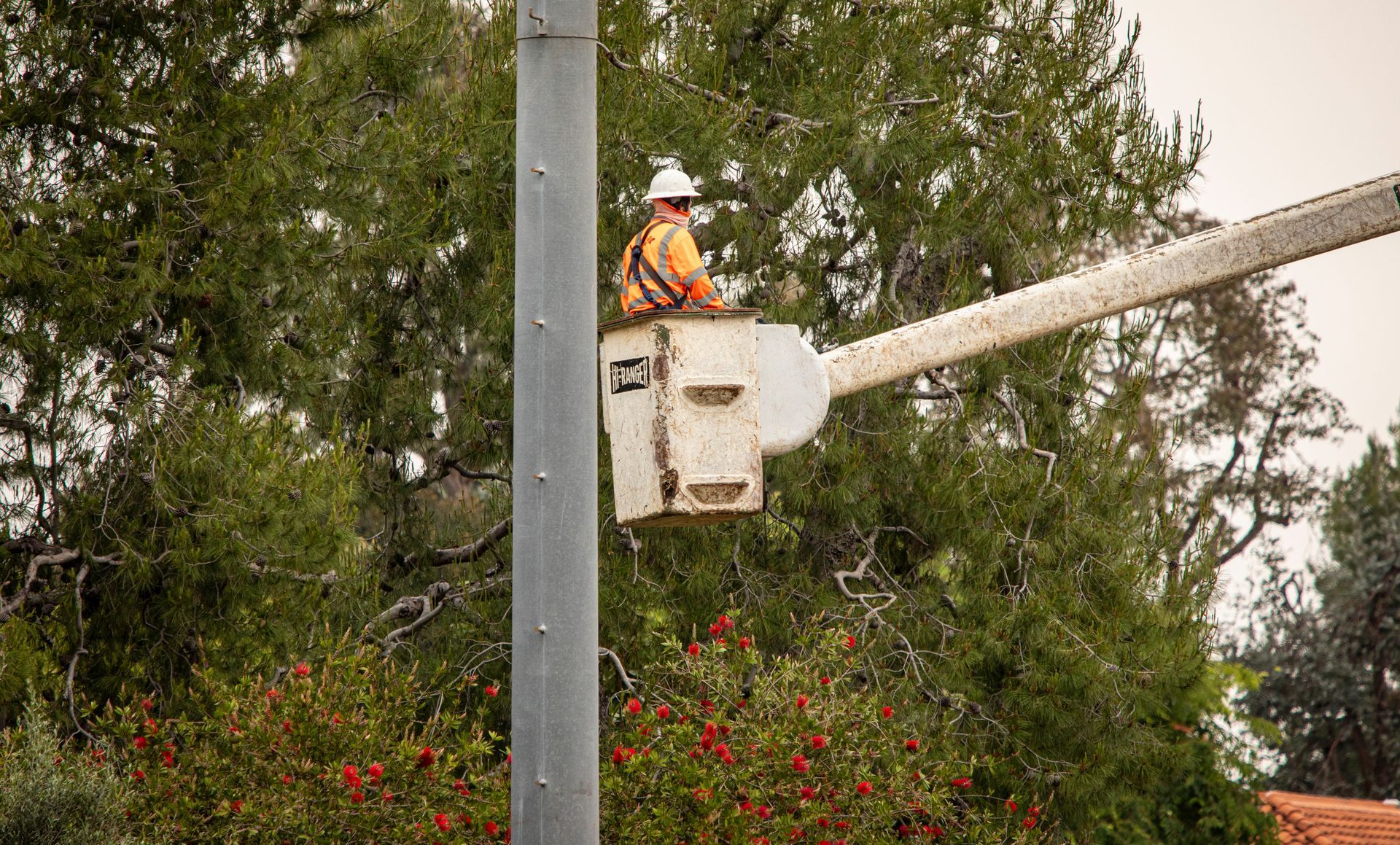
Trees approaching overhead lines on your Columbus, OH, property may create homeowner liability if a limb fails and causes damage or an outage. AEP Ohio manages distribution lines in the Columbus area, but trees on private lots remain the property owner's responsibility. A qualified residential tree service Columbus OH professional can assess clearance and recommend trimming or removal before the situation escalates.
When to Call Immediately vs. When to Schedule an Assessment
Call immediately if a tree has developed a sudden lean toward a structure, if a large limb is visibly hanging over a roof or driveway, or if recent storm damage has partially exposed the root ball. Conditions such as slow-growing trunk cavities, early-stage included bark, or suspected root compaction may allow a short window before a formal assessment, but they should be scheduled promptly rather than deferred.
Ready to Protect Your Columbus, OH, Home?
Don't wait for a storm to confirm what your tree was already telling you. Contact Cox Tree Service for professional residential tree service in Columbus, OH, free estimates, and 24/7 emergency availability. Backed by 70 years of family-owned experience, a 5-star Google Business rating, and fully licensed and insured crews, Cox Tree Service is ready when you need it most. Call (614) 294-1184. You can also review the tree removal services page before your assessment.